In short
I put about $97 into Binaryx in August 2024: a share in a rental property and a share in a construction project in Bali. Over two-plus years the rental share paid me $10.47, and payouts do arrive. But the main lesson is different: the “portfolio value” in the dashboard is based on a reference price, while real trades on the secondary market happen far lower — my construction tokens currently trade at $5.50 against a $34 reference price. Binaryx can work for a small, high-risk part of a portfolio that you are ready to hold for years, but not for money you may need.
Binaryx is a tokenized real estate platform. You buy tokens, each representing a share in a company that owns a specific property: a villa, apartments or a hotel. Most properties are in Bali, with some in Turkey and Montenegro. The minimum entry is $50, and settlements are in USDT on the Polygon network.
Don’t confuse it with BinaryX (BNX token) — a completely different company from the crypto gaming and DeFi space. Be careful when choosing which site to sign up on.
How Binaryx works
The platform is run by Binaryx Protocol DAO LLC, registered in Wyoming (USA) in December 2022. Each property is held by its own company — also a Wyoming DAO LLC. For example, my rental property belongs to Binaryx Kammora Living DAO LLC, and my construction project to Binaryx Dragon 1 DAO LLC.
The model works like this:
- A separate company is set up for each property and issues share tokens.
- You buy tokens with USDT and become a member of that company. You sign a Token Purchase Agreement.
- Rental income is distributed to token holders pro rata. You can claim it in USDT at any time.
- You can sell your share on the internal secondary market to other users — if a buyer shows up.
An interesting detail: as a member of a US company, you receive a Schedule K-1 tax form each year with your share of income. I have K-1 forms for 2024 and 2025 for both properties. This confirms that the legal structure actually works, but you will need to handle taxes in your own country yourself.
What I couldn’t find: the name of a regulator or licence, or published audit reports. The platform runs KYC and states that it complies with requirements, but that is not the same as supervision like on European crowdfunding platforms.
My experience: two properties over two years
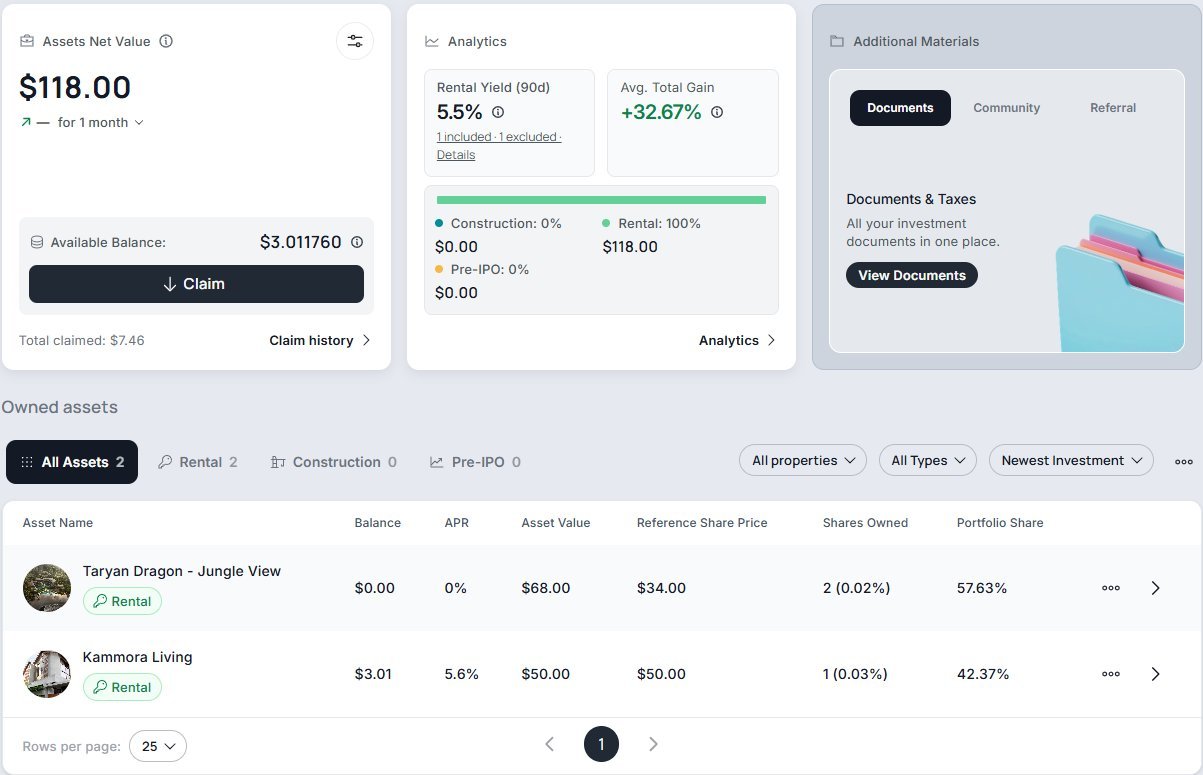
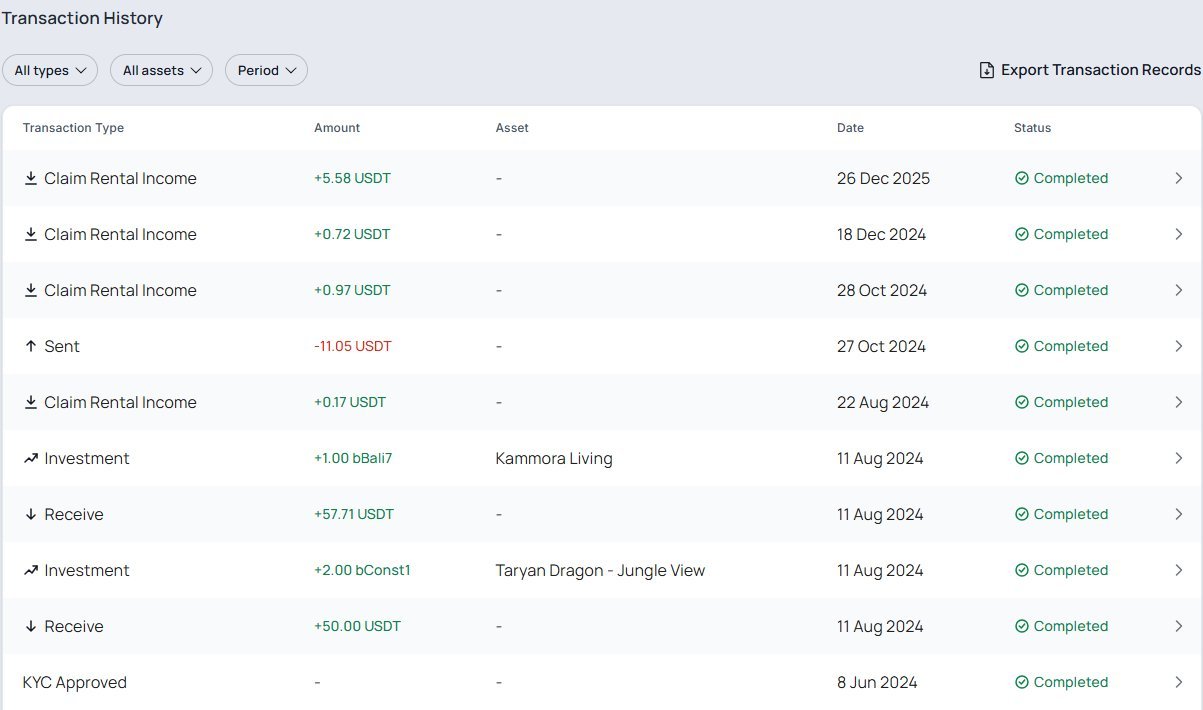
I passed KYC on June 8, 2024, and on August 11, 2024, I funded my wallet with 107.71 USDT and bought two positions:
| Property | Type | Invested | Reference price | Last market trade | Income |
|---|---|---|---|---|---|
| Kammora Living (Bali) | Rental | 50.00 USDT (1 token) | $50 | $30.10 | 10.47 USDT in rent |
| Taryan Dragon — Jungle View (Bali) | Construction | 46.84 USDT (2 tokens at 23.42) | $34 per token | $5.50 per token | 0 — under construction |
The rental property: income is real, but falling
According to the K-1 forms and the transaction history, Kammora Living paid:
- 2024 (August–December): $1.87 — about 9.6% annualized.
- 2025: $5.59 — 11.2% a year.
- 2026 (through October 22): $3.01 waiting to be claimed — about 7.4% annualized, and over the last 90 days the dashboard shows just 5.5–5.6%.
That’s $10.47 in total over a little more than two years on a $50 investment. The payouts are real, but the yield has almost halved. That is normal for rentals — occupancy changes by season and year — just don’t rely on the number in the listing.
The construction project: paper value vs real price
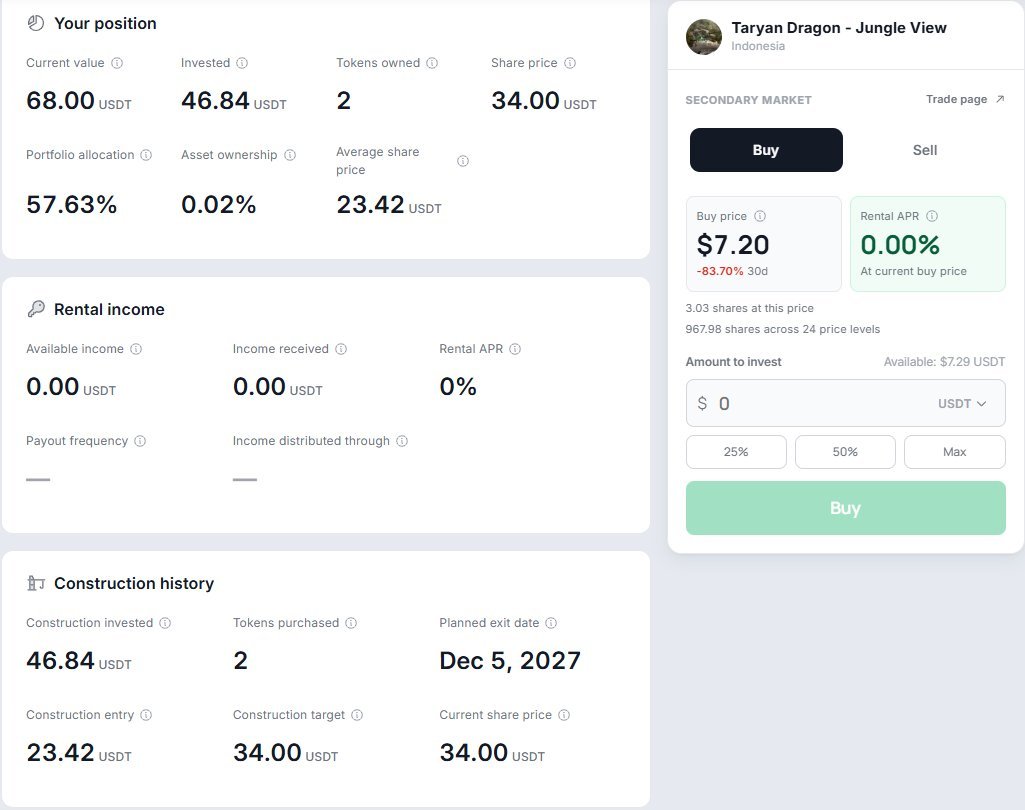
I entered the Taryan Dragon construction project at 23.42 USDT per token. The reference price is now 34 USDT, so the dashboard shows my position at 68 USDT — “+45%”. The planned exit date is December 5, 2027. The property doesn’t generate rent yet.
Now look at it from the market’s side: the last trade on this token was at $5.50, and the best ask is $7.20. If I needed the money today, selling at the reference price would be impossible. Realistically I’d get about $11–14 instead of $68.
The main lesson: reference price ≠ market price
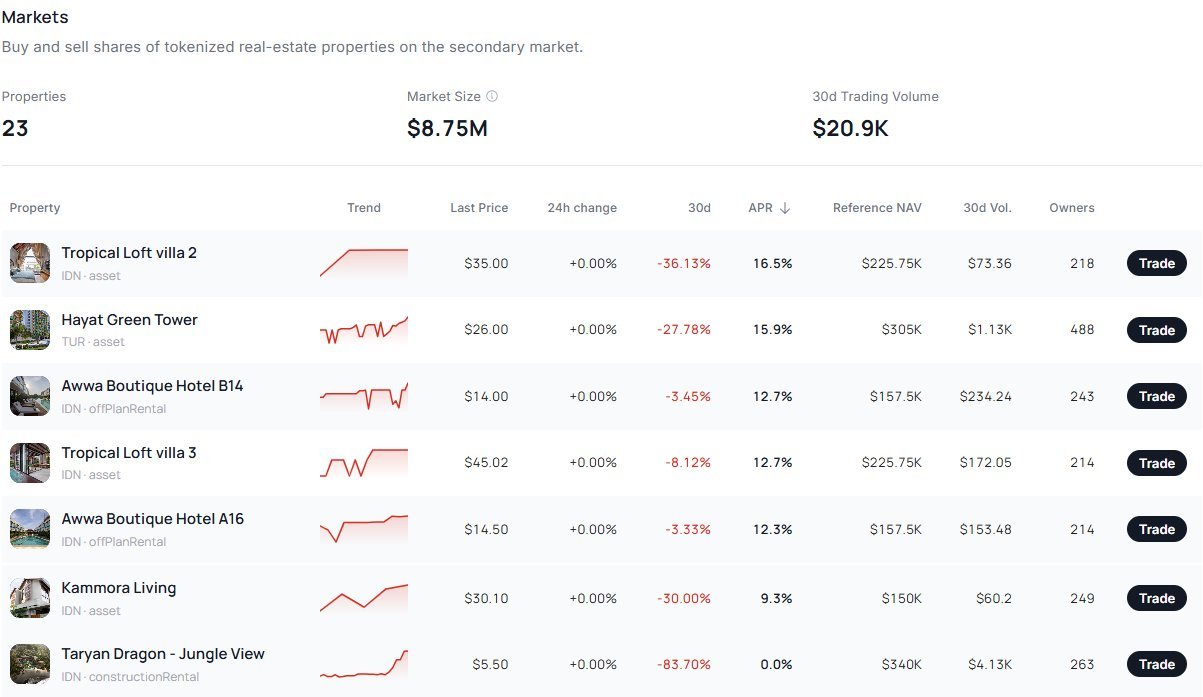
This is the most important thing to understand about Binaryx. Based on the market screenshot from October 22, 2026:
- The reference value of all 23 properties is $8.75M, while 30-day trading volume is $20.9K. That’s about 0.24% a month: the market is very thin.
- Most properties have lost value over 30 days; construction projects are down 40–84%.
- Market APR is calculated from the current buy price. Kammora shows 9.3% only because the token sells for $30.10 instead of $50. For those who bought at $50, the yield is the same 5.6%.
For a buyer this can be an opportunity — getting into a rental property at a discount. For a seller it can be a trap — you can only exit at a deep discount. So only invest money in Binaryx that you are ready to hold until the project’s planned exit.
What Binaryx offers in 2026
1. Rental properties
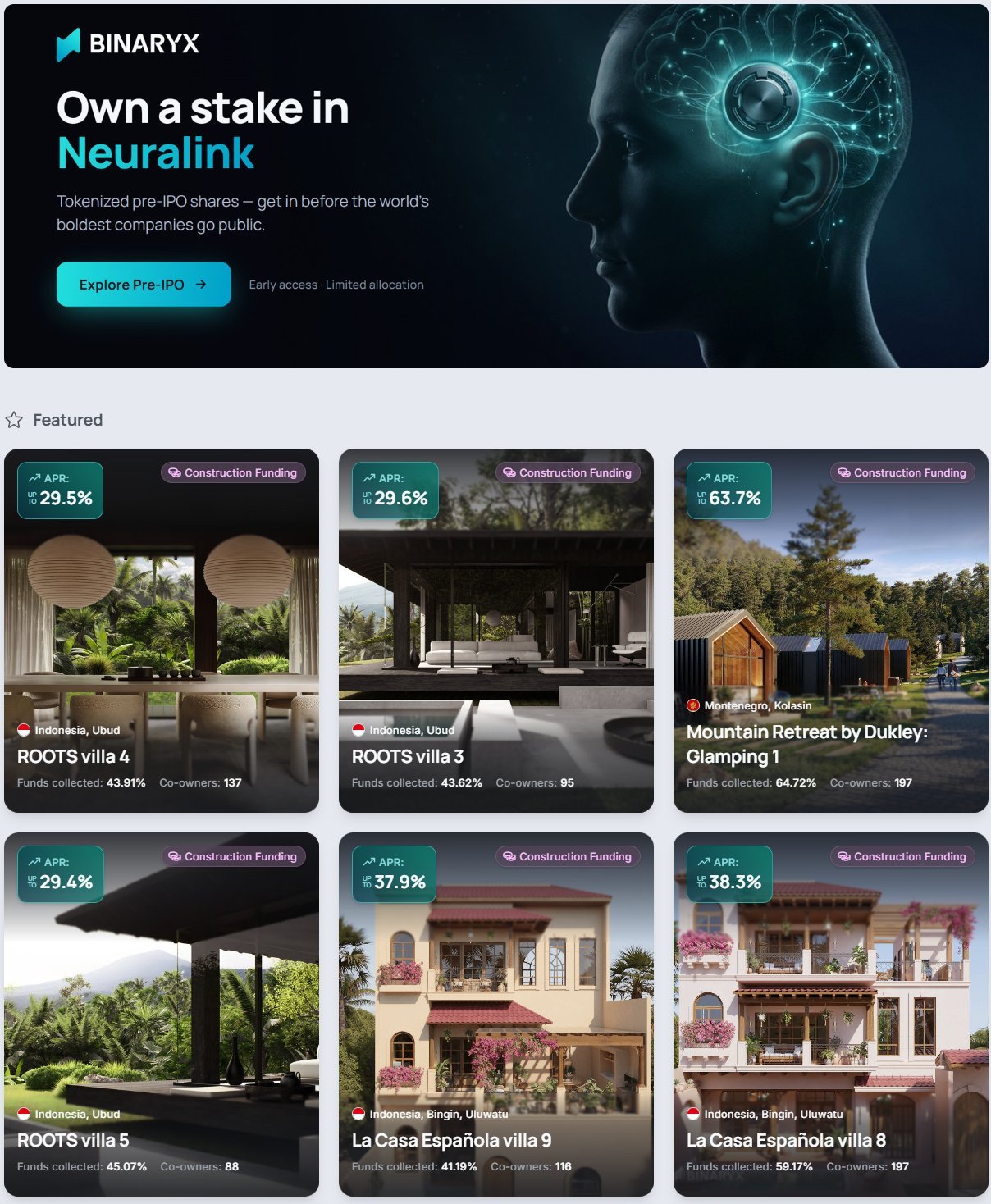
Finished villas, apartments and hotels that are already rented out. Income accrues in USDT and is collected with the Claim button. On the secondary market their APR is currently 9–16% — but, again, calculated from the current price, not the original one.
2. Construction projects
The loudest numbers: the home page advertises APR of up to 29–64%. That is an expected return including future price growth, not a guaranteed payout. Income only starts once construction is finished and rentals begin, and construction schedules can slip. My construction position hasn’t paid a cent so far.
3. Pre-IPO
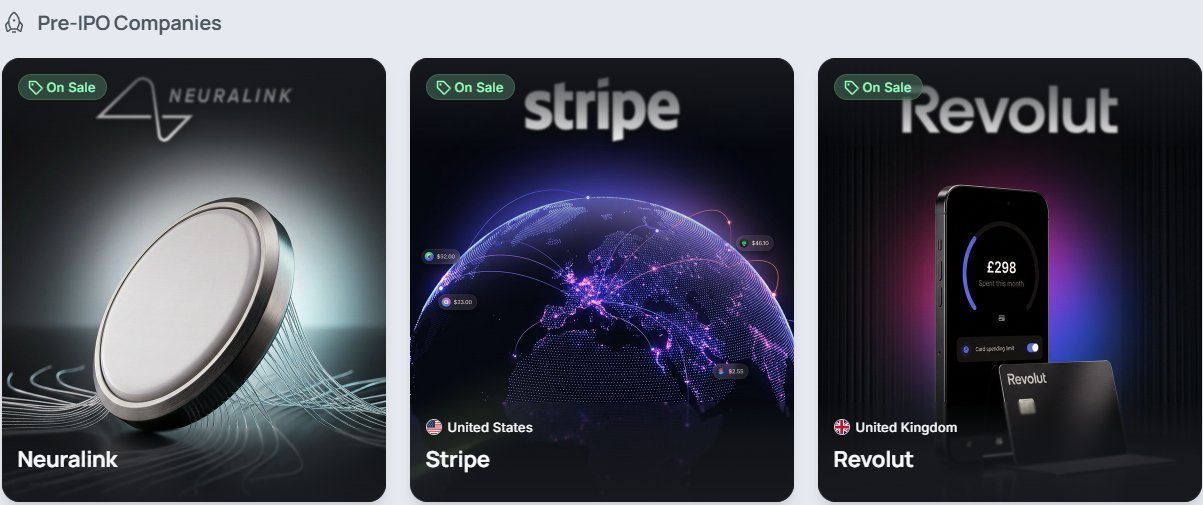
New: tokenized stakes in Neuralink, Stripe and Revolut before their IPOs. In practice you are not buying shares but a stake in a structure that itself holds (or promises to hold) those shares. A private investor can hardly verify the chain of ownership. This is a very high-risk product, and I don’t participate in it.
4. Secondary market (Trade)
An exchange for buying and selling tokens between users. Useful for buying a share at a discount, but as shown above, liquidity is extremely low.
5. Referral program
According to reviews, the platform pays 2% of a referred user’s investment in USDT. I have no referrals so far.
Fees
Every on-chain action costs gas in POL — in my history that’s fractions of a cent: from 0.003 to 0.05 POL per transaction. You need to keep a little POL in your wallet. Platform fees for buying, selling and property management are not clearly disclosed in the materials available to me — check them on the specific property page before you buy.
Pros and cons
| Pros | Cons |
|---|---|
| Entry from $50 into foreign real estate | Very low secondary market liquidity |
| Real rental payouts in USDT ($10.47 over 2 years in my case) | Reference portfolio value is far above market value |
| Each property is a separate legal company, with an agreement and K-1 forms | No named regulator and no published audits |
| Transparent transactions on the Polygon blockchain | Rental yield is unstable — mine fell from 11% to 5.6% |
| You can buy a share at a discount on the secondary market | Aggressive APRs on construction and risky pre-IPO products |
Who Binaryx is for — and who it isn’t for
A good fit for those who want to keep a small part of their portfolio in foreign real estate, understand the risks of crypto infrastructure and are ready to leave that money untouched for several years. The sensible choice is rental properties that are already generating income.
Not a fit for anyone who may need the money in the coming years, who is looking for guaranteed income, or who goes by the APR numbers in the listings. If you want real estate exposure with more protection, look at regulated European platforms offering property-backed loans.
How to start carefully
- Sign up via binaryx.com (my referral link; your terms don’t change) and pass KYC.
- Fund your wallet with USDT on Polygon and add a little POL for gas.
- Start with one rental property that is already rented out. Compare the reference price with the secondary market price — sometimes buying there is cheaper.
- Write down the wallet address you withdraw income to. I once withdrew 11.05 USDT and later spent a long time figuring out which of my wallets it went to.
- Keep your agreements and K-1 forms — you’ll need them for tax reporting.
Verdict: my rating
Binaryx is a working platform: it accepts money, pays rent and issues documents. But over two years I’ve also seen the other side: rental yield has halved, and the market price of my construction share has fallen to a sixth of its reference price. The “portfolio value” and APR numbers in the listings paint an optimistic picture; the real one is more modest.
VIN rating: 3 out of 5. Suitable for a small, high-risk slice of a portfolio in rental properties, if you are ready to hold it until the project ends. Construction projects and pre-IPO — only for those ready to lose what they put in.
Frequently asked questions
Is Binaryx a scam?
In my experience, no: over two years the platform accepted funds, accrued and paid out rent and sent tax forms. But it is an unregulated crypto platform with low liquidity, and investing in it carries high risk.
Can I withdraw my money at any time?
Rental income — yes, with the Claim button in USDT. The share itself can only be sold on the secondary market if there is a buyer, and often well below the reference price.
What is the real return?
On my rental property — 11.2% for 2025 and about 5.6% in recent months. The construction project hasn’t paid anything yet. The numbers in the listings are expectations, not guarantees.
What is the minimum investment?
From $50 per token; some properties have cheaper tokens. Pre-IPO products start, according to the platform, from $250.
How is Binaryx different from BinaryX (BNX)?
They are different companies. Binaryx is tokenized real estate; BinaryX (BNX) is a crypto gaming and DeFi token. Pay attention when choosing which site to register on.
Do I have to pay taxes?
The platform issues a US K-1 form showing your share of income. Check with a tax advisor how to declare this income in your country.
Read also
- FaucetPay review: 4.5 years in numbers
- Paysend review: transfers, fees and referral rewards
- Veles Finance review: crypto trading bots on Binance
This article contains a referral link: if you sign up through it, I may receive a reward, and your terms don’t change. This material is for information only and is not investment advice. Account and market data are current as of October 22, 2026.